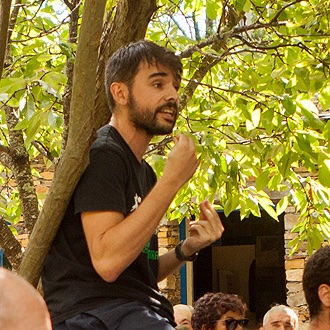
bio
I’m a geographer with a particular interest in understanding nature-culture interactions in managing contentious territories. My research typically draws on social movements, focusing on how grassroots organizing, both within and beyond the non-profit sector, drives struggles for social justice and shapes alternative rural and urban geographies. The forestry sector has been a central focus of my analysis, particularly around the role of large eucalyptus plantations in Spain and Western Australia.
Awarded the Extraordinary Doctoral Prize in 2024, my doctoral thesis formulates an approach to disputed forest spaces through landscape-scale planning. My work has been published, among others, in Political Geography, Landscape Research, Journal for Nature Conservation, Australian Geographer, and Bulletin of the Spanish Association of Geography. This body of work has informed reports and initiatives by public, private, and third-sector organizations, including the Spanish Research Agency, the Museum of Contemporary Art of Barcelona, and the ICCA Consortium.
My interests extend to other areas of Geography, such as (soft) mobility, geopolitics, inequality, and international cooperation. I am also passionate about maps and open-source GIS. I have primarily carried out my teaching duties at the University of Santiago de Compostela, where, during the 2026/2027 academic year, I teach undergraduate and master’s courses including Human Geography I, GIS Applications and Projects, Landscape Mapping, Digital Management of Geographic Heritage, and Land Stewardship and Social Land Management. I also coordinate the Service-Learning (ApS) project Coñecer para protexer: O Souto, recipient of the 2026 Educational Innovation in Geography Award from the Association of Spanish Geographers.
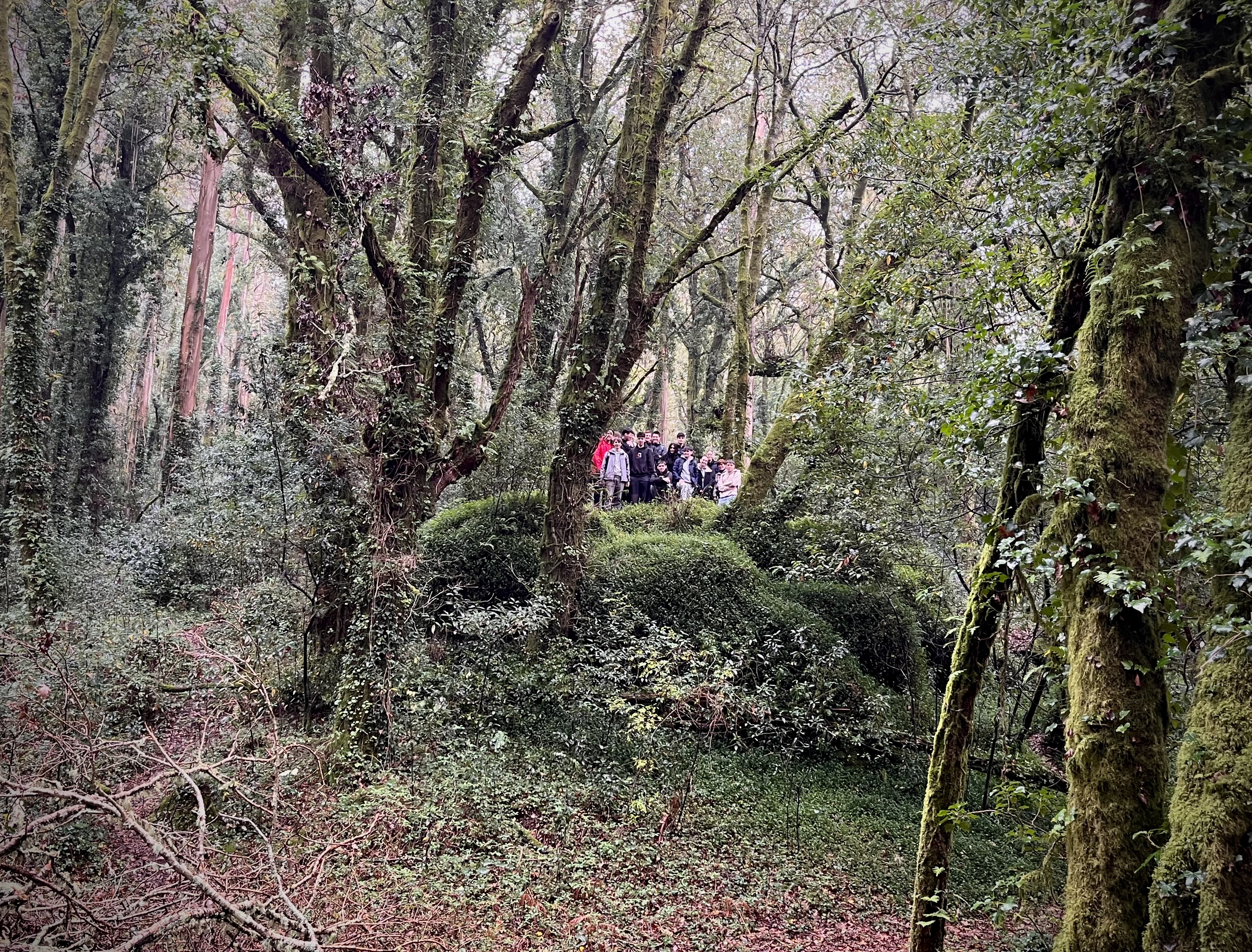 Fieldwork with 1st-year undergraduate students exploring a territorial conflict. The proposed construction of a wastewater treatment plant in a periurban Atlantic forest has sparked a dispute among local stakeholders, requiring resolution through planning and public participation. Following the field visit, we will develop a report for the local council. @ Santiago de Compostela, November 2024.